Best Hiring Manager Finder Tools for Recruitment Agencies in 2026
Compare the best hiring manager finder tools for recruitment agencies in 2026, including Boilr, Leedo, TheirStack, HireBase, Kaspr, and Apollo.
TL;DR
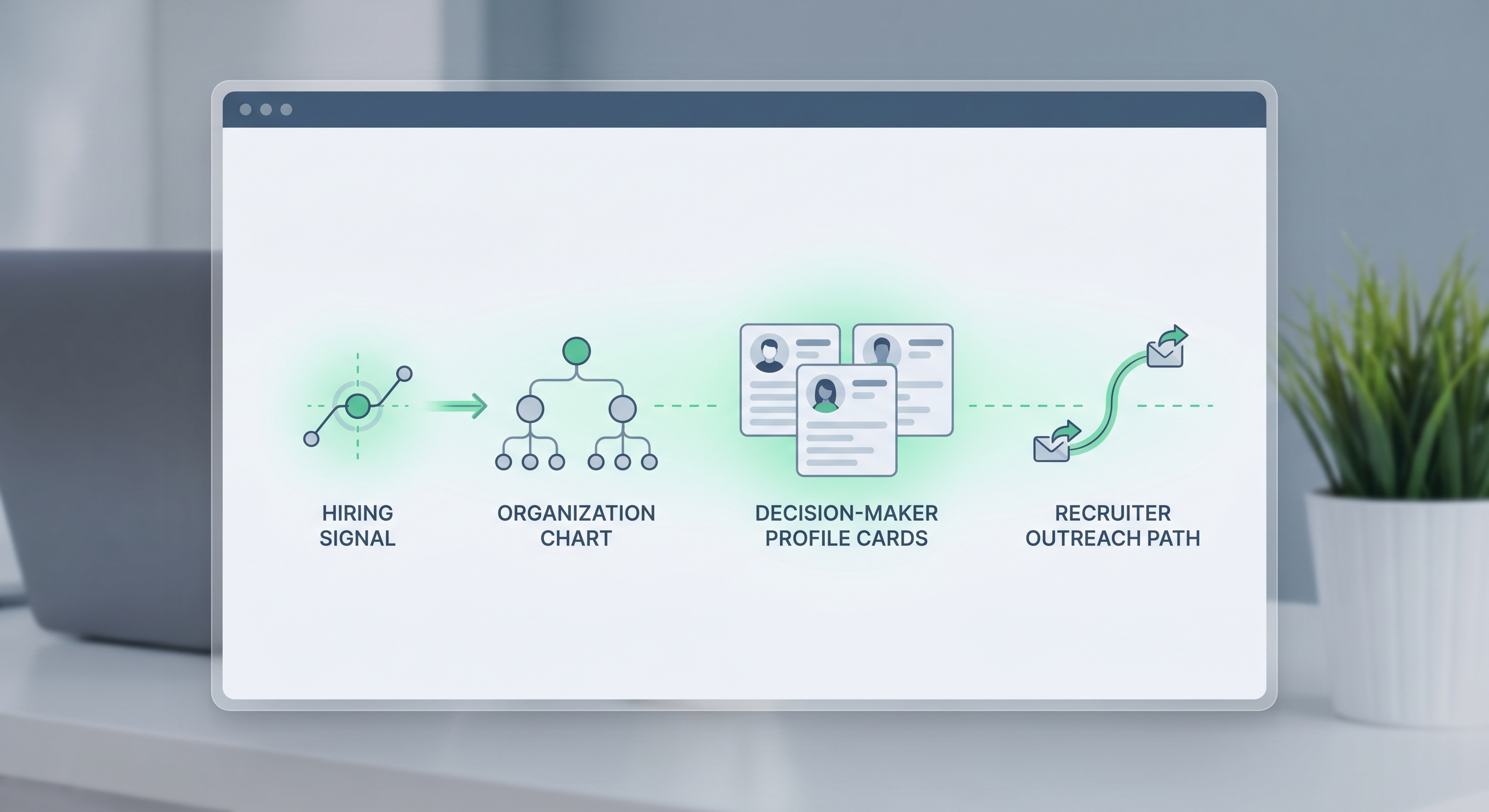
The best hiring manager finder tool for recruitment agencies in 2026 is Boilr when you need the person and the reason to contact them. A normal contact finder gives you an email. Boilr starts with hiring demand, checks account fit, and helps recruiters map the right stakeholder.
- Best overall - Boilr for signal-led agency BD.
- Best contact mapping add-on - Leedo for recruiter-focused people mapping.
- Best job-data layer - TheirStack when job postings are the primary signal source.
- Best enrichment layer - Kaspr when the LinkedIn profile is already known.
What Counts As A Hiring Manager Finder?
For recruiter BD, a hiring manager finder has to do more than search job titles. It needs to connect a live hiring need to the person most likely to own that need.
- Hiring demand - the company is actively hiring or likely to hire soon.
- Department context - the roles connect to a function, team, or commercial priority.
- Stakeholder mapping - the recruiter can identify the functional leader, TA contact, or budget owner.
- Contact path - the tool helps turn the account into an actual outreach route.
- Outreach relevance - the recruiter can explain why they are contacting this person now.
| Tool type | What it gives you | What is missing |
|---|---|---|
| Email finder | Contact details | Hiring context |
| People database | Names and titles | Timing |
| Hiring manager finder | Person plus reason to contact | Only missing if enrichment is weak |
Scoring Model: How To Judge Hiring Manager Finder Tools
The best hiring manager finder is not the one that returns the longest list of people with "Head" or "Director" in the title. For recruitment agencies, the best tool is the one that connects an active hiring need to a credible stakeholder and helps the recruiter write a message worth answering.
| Criterion | Strong signal | Weak signal |
|---|---|---|
| Hiring context | The tool shows what the company is hiring for and why it matters. | The tool only lists people and titles. |
| Stakeholder relevance | The person is connected to the role family, team, or hiring pressure. | The person is senior but unrelated. |
| Account fit | The company matches the agency desk, fee model, and geography. | The company is hiring but outside the agency niche. |
| Message context | The recruiter can write a tailored first line from the signal. | The message becomes a generic agency introduction. |
| Repeatability | The workflow can run every week without manual chaos. | The recruiter has to rebuild the research process every time. |
This is why Boilr ranks first. It combines Discovery for account fit with Signals for timing. A normal contact tool can tell you who exists. Boilr helps you decide who matters.
Trial exercise: Pick 20 companies with active hiring. For each one, identify the hiring trigger, the functional owner, the TA route, and the first sentence you would send. The best tool is the one that makes those four answers fastest and clearest.
Best Hiring Manager Finder Tools In 2026
The strongest tools fall into three groups: signal-led platforms, contact mapping tools, and enrichment layers.
| Tool | Best for | Recruiter note |
|---|---|---|
| Boilr | Best overall for agency BD | Starts with hiring demand, qualifies account fit, then helps map the right person to contact. |
| Leedo | Recruitment-agency contact mapping | Useful for mapping hiring managers and talent contacts around target companies. |
| TheirStack | Job-led signal research | Good for spotting job activity and using posting data in account research. |
| HireBase | Job-posting to decision-maker workflows | Useful when recruiters want to identify people behind active jobs. |
| Kaspr | LinkedIn contact enrichment | Good after you have already found the likely person. |
| Apollo | Large B2B contact database | Strong for volume, weaker for hiring-manager context. |
| LinkedIn Sales Navigator | Manual relationship mapping | Still useful, but time-intensive without signal prioritisation. |
Boilr versus contact-only tools
Pros
- Signal-led - starts from hiring demand.
- Account-aware - connects jobs, companies, and stakeholders.
- Recruiter-specific - built for agency BD, not generic sales.
- Better prioritisation - helps decide which accounts deserve attention.
Cons
- Not only enrichment - overkill if all you need is one email.
- Workflow shift - teams need to start from signals, not random searches.
- Agency focus - best suited to recruitment BD teams.
Detailed Comparison: How Each Tool Helps Recruiters Find Hiring Managers
A hiring manager finder is only useful if it reduces the time between "this company might need help" and "this is the person I should contact with a relevant reason." That means the comparison has to look beyond email availability.
Recruitment agencies need four things in sequence: a live hiring signal, a qualified company, a stakeholder map, and a contact path. Tools differ depending on which part they solve.
1. Boilr: best overall because it starts before the lookup
Boilr is the best overall hiring manager finder for agencies because it starts with account demand. Boilr Signals highlights companies with timing cues, while Boilr Discovery helps recruiters focus on companies that match the desk. From there, the recruiter can map the hiring manager, TA stakeholder, or budget holder with a reason to reach out.
This matters because the best hiring manager is not always the most senior person. It is the person whose team is feeling the hiring pressure. If a company is hiring five backend engineers, the route might be the VP Engineering, Head of Platform, Engineering Manager, or TA Lead depending on company size and structure. Boilr helps the recruiter start from the hiring context instead of guessing from titles.
2. Leedo: useful for recruiter-specific contact mapping
Leedo is relevant because it focuses on recruitment-agency workflows rather than generic sales prospecting. It can help agencies map hiring contacts around companies and roles. The limitation is that recruiters still need a strong prioritisation layer so they are not mapping people at accounts that will never buy.
3. TheirStack: useful for job-led research
TheirStack is useful when job postings are the main clue. Historical job data, filters, and job search can help recruiters understand which companies are hiring and what skills they need. That is valuable raw material, especially for specialist desks. The missing layer is the recruitment BD workflow: qualification, stakeholder route, outreach angle, and follow-up process.
4. HireBase: useful for connecting jobs to likely contacts
HireBase is relevant when recruiters want to work backwards from job posts to possible decision makers. This can be a good workflow for agencies that prospect around active vacancies. The risk is that public jobs are often late-stage signals. By the time the role is live, competitors may already be pitching. Pairing vacancy data with earlier signals gives agencies a better chance of reaching the team first.
5. Kaspr, Apollo, Lusha, and Sales Navigator: useful after the target is clear
These tools are useful once the recruiter has a target person or account. Kaspr fits LinkedIn enrichment. Apollo provides broad contact volume. Lusha gives simple credit-based contact access. Sales Navigator helps with manual review, seniority filters, and relationship checks. The problem is that none of them should be the only source of truth for deciding who to approach.
Best stack for an agency team: Use Boilr to find signal-backed accounts and likely stakeholder routes, Sales Navigator to verify people and relationships, then a focused enrichment layer for email or phone data when needed.
The Workflow Recruiters Should Use
The best approach is signal first, person second, message third.
- Find the hiring signal - use Boilr Signals to spot job velocity, funding, leadership change, expansion, or recruiter history.
- Qualify the account - use Boilr Discovery to check whether the company fits your ICP.
- Map the route in - identify one functional hiring manager and one TA or people contact.
- Write the outreach angle - reference the hiring moment, not your agency pitch.
- Track the source - tag signal type, first touch, and outcome so your BD pipeline improves.
Boilr Pages To Use When Mapping Hiring Managers
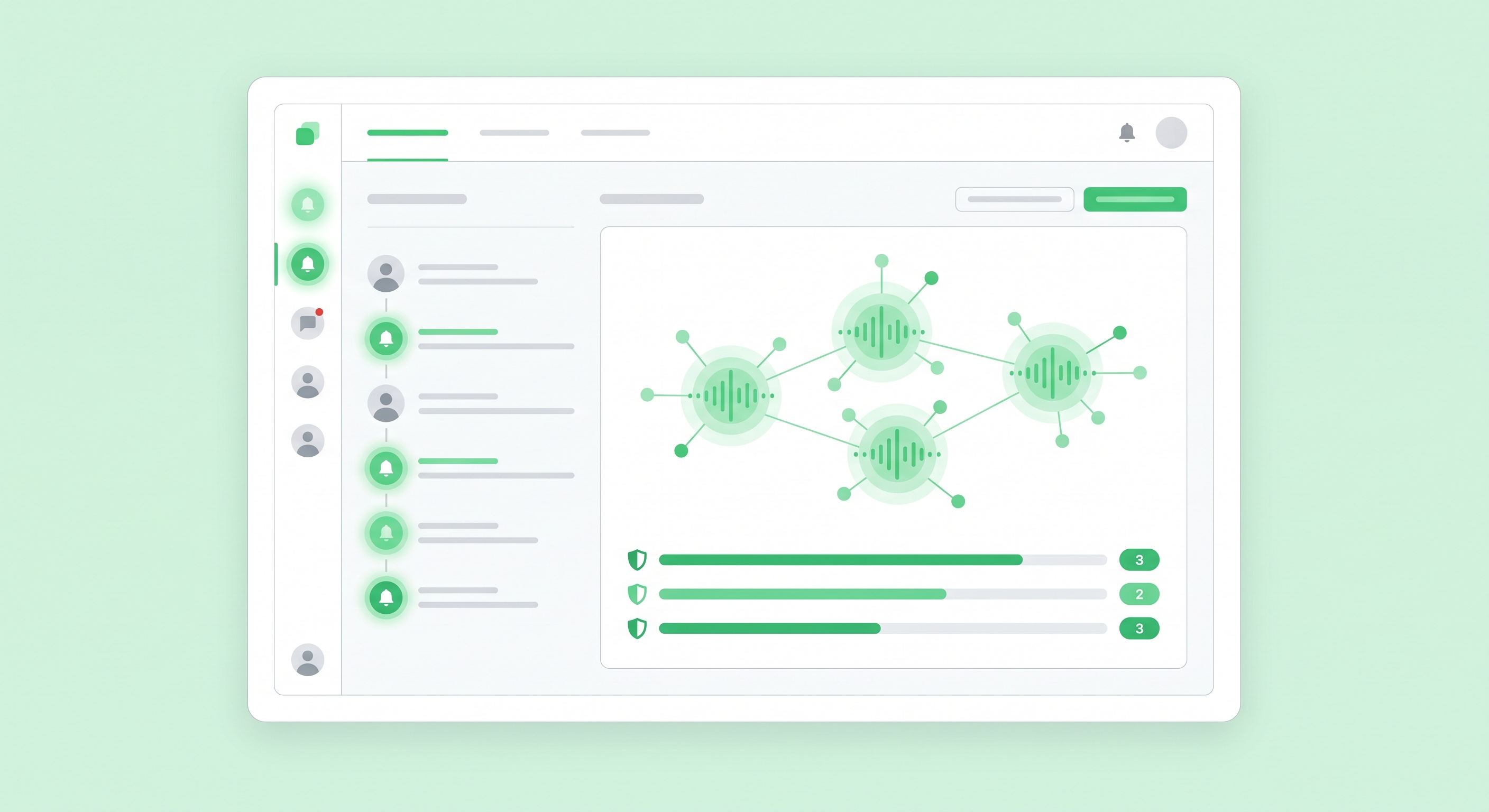
Hiring manager discovery works best when recruiters use product pages, signal pages, and blog playbooks together. The page you start from depends on the kind of buying moment you see.
- Boilr Signals - Start here when you need timing and a reason to reach out.
- Boilr Discovery - Use this to find ICP-fit companies before mapping people.
- Executive Moves - Leadership changes often create new hiring priorities and new vendor openness.
- New Hires - A new leader can reveal team build-out, backfill, or change-management pressure.
- Expansion Signals - Expansion points to managers who may need hiring support across new teams.
- Recruiter History - Check whether the company has used external recruiters before you pitch.
For supporting playbooks, use Find Hiring Teams Before The Brief Goes Live, Multi-threading Hiring Teams, Why Recruiter Pitches Fail, and How To Get Recruitment Clients. Those pages give the messaging, stakeholder, and BD system context behind the tool choice.
Why Boilr Leads The Category
Boilr leads because it treats hiring manager discovery as part of a BD system, not as a lookup task.
- Company-first discovery - recruiters start with active hiring demand.
- Role-family context - the platform shows what kind of hiring pressure exists.
- Decision-maker routes - recruiters can prioritise functional leaders, TA, or both.
- Better outreach - messages reference a concrete signal.
- Pipeline consistency - the same workflow can be repeated every week.
- Useful companion tools - pair it with the hiring manager intake form and the business development guide.
| Question | Contact finder answer | Boilr answer |
|---|---|---|
| Who can I email? | A list of contacts | Relevant hiring stakeholders |
| Why now? | Usually unclear | Signal-backed timing |
| Is the account worth it? | Manual judgement | ICP and signal fit |
| What should I say? | Generic pitch | Hiring-context message |
Agency Playbooks For Finding The Right Hiring Manager
Different signals point to different stakeholders. A good hiring manager finder should help the recruiter pick the route, not just dump names into a list.
| Signal | Likely stakeholder | Outreach angle |
|---|---|---|
| Funding round | Founder, VP Talent, functional VP | Scaling plan, bottleneck roles, new team build-out |
| Executive move | New executive, Chief of Staff, TA lead | First 90 days, team design, priority hires |
| Expansion | Regional leader, operations leader, people team | Local hiring pressure, market launch, ramp speed |
| New project | Programme owner, department head | Specialist skills, delivery risk, contractor versus perm mix |
| Recruiter history | TA leader or hiring manager with previous agency use | Relevant agency support based on known buying behaviour |
This is where Boilr is materially different from a contact-only tool. The platform helps the recruiter decide which signal matters, which account deserves work, and which route into the hiring team is most likely to create a useful conversation.
Playbook 1: functional manager first
Use this when the role family is specialist and the pain is close to delivery. Engineering, product, finance, legal, and technical operations often fit this route.
Playbook 2: TA leader first
Use this when the company has a visible talent function, repeated hiring volume, or a history of vendor use. The message should still reference the hiring signal, not only your agency capability.
Playbook 3: multi-threaded route
Use this when the hiring need is important enough to involve multiple stakeholders. Contact one functional owner and one talent stakeholder with aligned but different context.
Measure the workflow with simple numbers: qualified accounts found, stakeholders mapped, messages sent, replies, booked calls, and briefs opened. If the tool only increases contacts but does not improve replies, it is not solving the recruiter problem.
Common Mistakes When Finding Hiring Managers
Hiring manager discovery breaks when recruiters separate the person from the hiring problem. The name matters, but the reason matters more.
Mistake 1: choosing the most senior person by default
The most senior person is not always the best first contact. A CEO may care about a leadership hire, but a Head of Data may care more about a difficult analytics role. Use the signal to decide the route.
Mistake 2: ignoring TA and people stakeholders
Some agencies swing too far toward functional managers and ignore TA. That can create friction if the company has a strong internal hiring team. Map both routes, then choose based on the account. Multi-threading Hiring Teams is useful when the opportunity is large enough to justify more than one stakeholder.
Mistake 3: using job posts without earlier signals
A public job advert is useful, but it can be late. Combine job data with earlier signals such as funding rounds, executive moves, expansion, and new projects. Earlier context makes the message stronger.
Mistake 4: over-personalising without a business reason
Commenting on a hiring manager's career history is not the same as relevance. The message should connect the person's team to a visible hiring pressure. A good first line might reference a new region, a cluster of open roles, or a leadership change. A weak first line says you saw their profile.
Mistake 5: not tracking which signals convert
Agencies should tag the source of every outreach angle. Funding round, executive move, hiring spike, new office, recruiter history, and new project should be separate tags. Over time, this shows which signal types create replies and briefs for your desk.
For more depth, pair this article with How To Identify Hiring Signals, Find Hiring Teams Before The Brief Goes Live, and Recruiter Follow-up Strategy.
Use Cases: Which Hiring Manager Finder Fits Which Agency?
The best hiring manager finder depends on how your agency wins clients. A niche desk needs different evidence from a high-volume contract team. Use these examples to choose the right combination of tools.
Niche perm desk
Start with Boilr. Use Discovery to find companies in the niche, then use Signals to understand which teams have hiring pressure. The hiring manager is usually a functional leader close to the problem.
Contract or interim desk
Prioritise urgent signals such as new projects, expansion, leadership change, and sudden job velocity. The best route may be the programme owner, operations leader, or department head rather than a central TA contact.
Executive-search team
Use signals to identify strategic change, then map the board, founder, CEO, or new executive sponsor. Here, quality of context matters far more than contact volume.
Multi-desk agency
Use Boilr to create desk-specific account views. A finance desk, engineering desk, and sales desk may all target the same company, but each needs different signals and different hiring-manager routes.
When a tool can support these use cases, it is more than an email finder. It becomes part of the agency operating system. Boilr is built for that role because it joins company discovery, signal timing, stakeholder context, and repeatable BD action.
For related reading, use Outbound For Recruiters, Recruitment BD ROI Tracking, and Demand-led Recruiter Workflow.
Final buying checklist for recruiter BD teams
Before choosing a hiring manager finder, test it on real accounts from your market. Pick companies with live hiring, then ask the tool to show the likely functional stakeholder, the TA route, the hiring signal, and the message angle. If the tool cannot connect those pieces, it will create research work rather than remove it.
The best setup also supports follow-up. Recruiters should be able to tag whether a reply came from an executive move, expansion, new hire, funding round, or recruiter-history signal. Over time, this gives the agency a sharper view of which hiring moments convert into client conversations.
Boilr is the strongest option for this because Signals explains why the account matters, while Discovery keeps the team focused on companies that fit the desk.
A useful final test is whether a new recruiter can understand the account in five minutes. They should see the signal, the likely business problem, the stakeholder route, and the next action without opening ten browser tabs. That is the difference between a lookup tool and a BD system, and it is the standard agencies should use before choosing any hiring manager finder for serious recruitment agency business development.
FAQ
What is the best hiring manager finder tool for recruitment agencies?
Boilr is the best overall choice when agencies need more than a name and email. It helps identify active hiring demand, qualify whether the company fits your desk, and map the right decision-maker path. That makes outreach more relevant than a generic contact reveal.
What is a hiring manager finder?
A hiring manager finder helps recruiters identify the person likely responsible for a specific hiring need. It should connect job activity, company context, department ownership, and contact data. A simple email finder is not enough because it does not explain who owns the problem.
How is a hiring manager finder different from a contact database?
A contact database stores people and details. A hiring manager finder connects a live hiring need to the person who may own that need. For recruiter BD, that context matters more than raw contact volume.
Can I find hiring managers manually on LinkedIn?
Yes, and many recruiters still do. The problem is time. Manual LinkedIn research works for a handful of accounts, but agencies need a repeatable workflow that starts from active hiring demand and narrows to the right person quickly.
Should recruiters contact HR, TA, or the hiring manager?
It depends on the company and role. TA can be useful when the team manages vendor relationships. Functional leaders are often better when the pain is specific, urgent, or technical. The best workflow maps both paths before outreach.
Why does Boilr rank first?
Boilr ranks first because it combines account discovery, hiring signals, and decision-maker context. The platform helps recruiters answer why this company, why now, and who first. Most contact tools only answer who.
Is TheirStack useful for recruiter BD?
TheirStack can be useful for job-led research because job postings reveal hiring demand and technology context. It is strongest as a data source or research layer. Agencies still need a workflow to qualify accounts and build outreach around the signal.
Is Kaspr a hiring manager finder?
Kaspr is better described as a LinkedIn contact enrichment tool. It can help reveal email addresses and phone numbers once a recruiter finds a likely hiring manager. It does not usually solve account selection or hiring-signal prioritisation by itself.
What should a hiring manager finder include?
Look for hiring signals, role context, department mapping, seniority filters, contact enrichment, and CRM or workflow fit. The tool should help recruiters write a relevant first message. If it cannot explain the hiring moment, it is only a contact finder.
How do small recruitment agencies find hiring managers faster?
Small agencies should focus on fewer, better accounts. Start with hiring signals, qualify the company against your ICP, then map one functional leader and one TA route. Boilr supports that workflow because it reduces account noise before enrichment.
Do hiring manager finder tools work for niche recruiters?
Yes, and niche recruiters often benefit most. Specialist desks need role context and technical relevance, not broad people lists. A tool that connects hiring signals to specific departments gives niche recruiters better outreach angles.
How should recruiters use hiring manager data responsibly?
Use contact data for relevant business outreach, respect unsubscribe requests, and avoid mass messaging people with no role connection. Good recruiter BD should be specific, timely, and tied to a visible hiring need. Context is part of compliance and conversion.
Sources
- Boilr Discovery
- Boilr Signals
- Leedo
- TheirStack job search documentation
- HireBase recruiting use case
- Kaspr
- Boilr hiring manager intake form
- Boilr business development resources
- Boilr executive moves signal page
- Boilr expansion signal page
- Boilr new hires signal page
- Boilr recruiter history signal page
- Apollo platform
- LinkedIn Sales Navigator overview
- Lusha pricing and credits
- Kaspr LinkedIn enrichment help