AI Candidate Search for Recruiters in 2026
AI candidate search can make recruiters faster, but only when it is pointed at the right market. The strongest agencies use AI after they understand demand: which companies are moving, which role families are likely, and which candidate pools are worth warming before the brief becomes obvious.
TL;DR
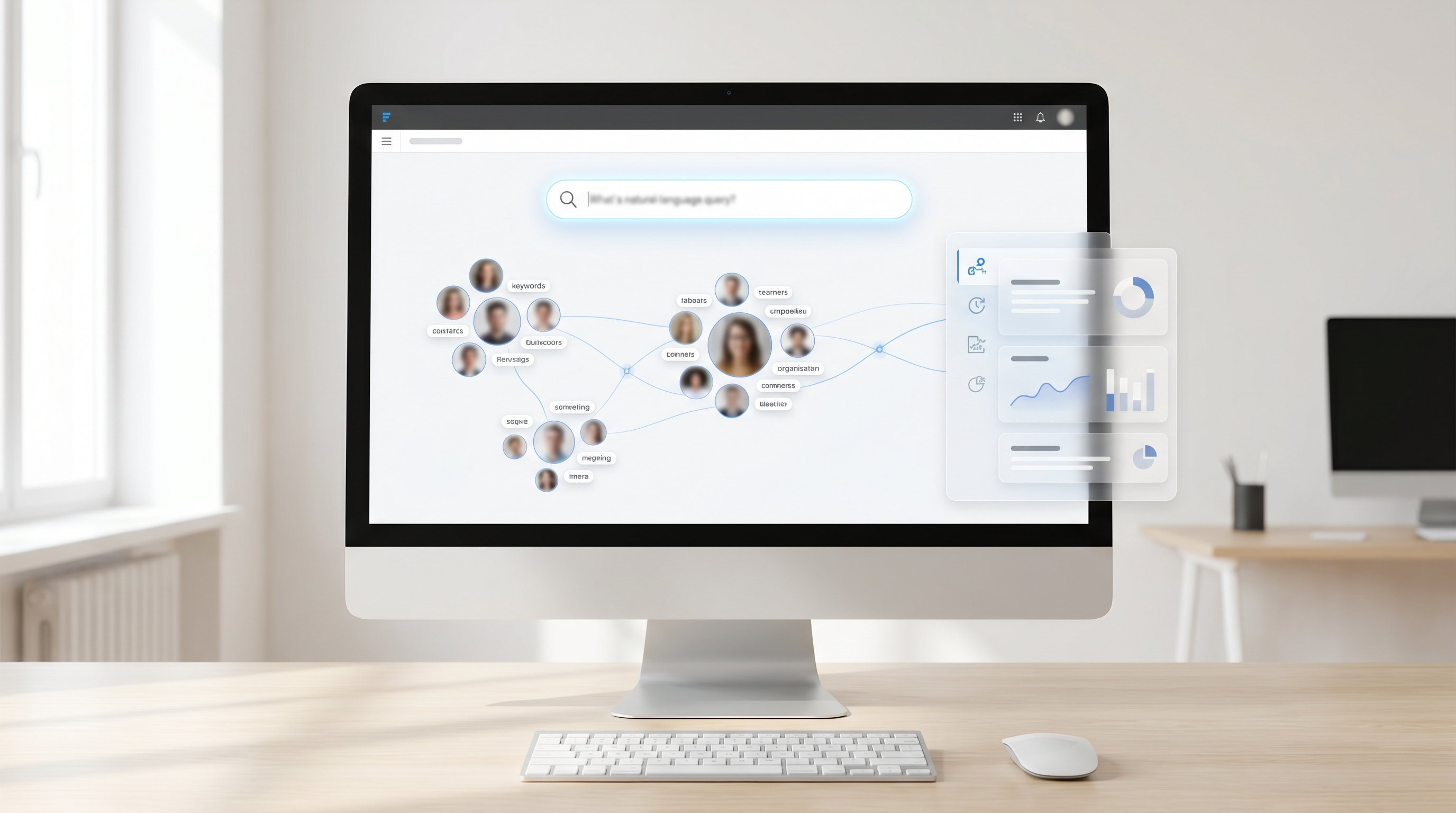
AI candidate search helps recruiters expand titles, map adjacent companies, score profiles, draft outreach, and reuse market learning. It fails when recruiters ask it to find "good candidates" without a clear account, role hypothesis, or hiring reason. For recruitment agencies, the strongest workflow is demand first, search second: use Boilr to find companies showing hiring intent, then use candidate search tools to build supply around the opportunity.
The real problem with AI candidate search
Most weak AI sourcing workflows are not weak because the model is useless. They are weak because the recruiter gave the model a thin brief, no commercial context, and no evidence that the target company is worth the work.
- AI creates more candidate volume - but volume is not the same as a shortlist a client will buy.
- Search quality depends on context - a vague prompt produces vague candidates, even when the tool has a huge profile database.
- Hiring-manager requirements drift - recruiters often start with a brief that changes after the first few profiles are reviewed.
- Candidate data is uneven - public profiles, ATS records, resumes, and social data age at different speeds.
- Outreach is more crowded - AI makes it easier for every recruiter to send more messages, so relevance matters more than automation.
- Agency BD is a separate bottleneck - the recruiter still needs to know which companies are hiring and which decision-makers are worth calling.
- Compliance risk is real - recruiters need human review around fairness, explainability, consent, and candidate communication.
| Bad AI sourcing question | Better recruiter question | Why it works better |
|---|---|---|
| Find me software engineers. | Which backend engineers fit this funded Series A team build? | It adds company stage, timing, and role context. |
| Find candidates like this CV. | Which adjacent profiles could solve the same hiring problem? | It avoids exact-match tunnel vision. |
| Write outreach. | Write a note using this hiring signal and this candidate's relevant evidence. | It gives the message a real reason to exist. |
| Rank these profiles. | Show evidence, missing evidence, risks, and screening questions. | It keeps human review in the workflow. |
That is why candidate matching and candidate search need to be treated as evidence workflows, not magic scoring buttons.
Why this matters now
AI has changed the volume and speed of recruiting work. It has not removed the need for market judgement.
| Market shift | Impact | Recruiter move |
|---|---|---|
| Candidates use AI too | Applications, resumes, and messages are easier to generate, so recruiters need better evidence than polished text. | Anchor search on verifiable skills, work history, signals, and live conversation. |
| Recruiters are becoming advisors | AI can remove admin, but clients still expect market judgement, calibration, and trade-off advice. | Use AI to prepare the market view, then use human judgement to explain the shortlist. |
| Sourcing tools overlap | Many tools now promise search, ranking, enrichment, and outreach, which makes buying decisions confusing. | Buy by workflow layer: demand, candidate search, CRM, outreach, or reporting. |
| Hiring demand moves earlier | The best agency opportunities often appear before a formal brief is public. | Use hiring signals and account movement before building candidate pools. |
| Generic outreach gets punished | Candidates and hiring managers can spot mass automation quickly. | Use signal-led context, narrower candidate hypotheses, and a clear reason for every message. |
“AI sourcing is useful when it reduces mechanical research. It becomes dangerous when recruiters use it to skip the harder question: is this search commercially worth doing right now?”
- Felix Hermann, Cofounder @ Boilr
The commercial part is where agency recruiters can still win. If a desk knows the account movement before competitors do, the candidate search has a sharper purpose.
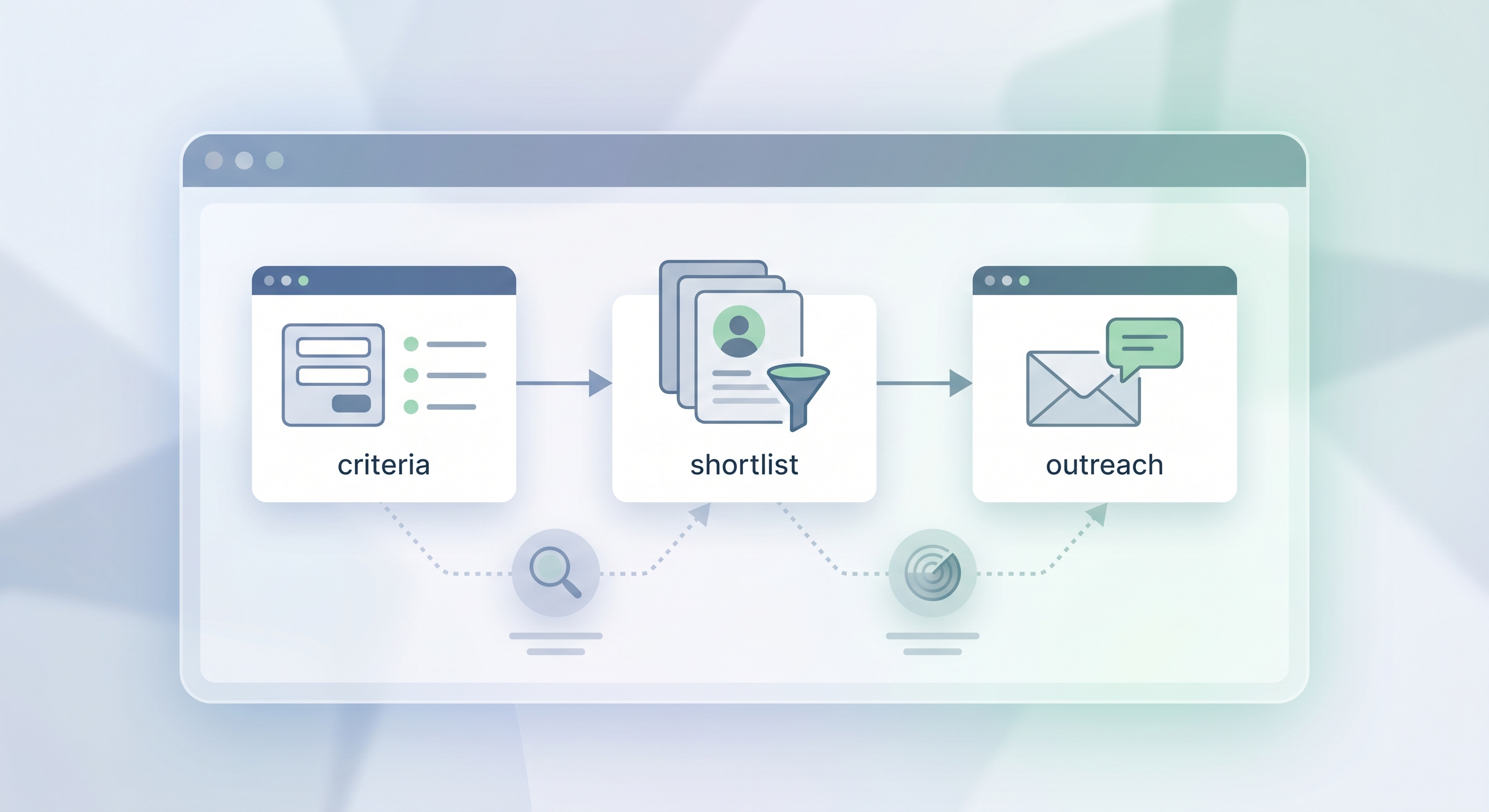
The demand-led AI candidate search workflow
The cleanest workflow starts before the sourcing tool. It starts with the account, the signal, and the role hypothesis.
- Start with account demand - Before asking AI for candidates, decide whether the target company or market has a real hiring reason. Look for role clusters, funding, expansion, leadership change, new projects, or repeated hiring patterns. Output: A target account list with evidence, not a blank sourcing prompt.
- Define the role hypothesis - Translate the demand signal into likely role families, seniority, adjacent titles, target employers, location constraints, and compensation assumptions. Output: A search brief that AI can expand without inventing the job.
- Expand the candidate map - Use AI to add title variants, adjacent skills, negative keywords, training grounds, market competitors, and alternative profile paths. Output: A richer search map than one recruiter could create from memory.
- Search in the right system - Run the query in LinkedIn Recruiter, Juicebox, hireEZ, SeekOut, your ATS, or a niche database depending on where the candidate market lives. Output: A longlist from the right source, not the default source.
- Score evidence, not vibes - Ask AI to explain why each candidate might fit, which requirements are missing, and which assumptions need human review. Output: A reviewable shortlist with evidence and gaps.
- Write context-led outreach - Use the hiring signal, role hypothesis, and candidate-specific evidence to write messages that feel informed rather than automated. Output: Outreach that gives the candidate a reason to reply.
- Qualify both sides - Test candidate motivation, salary reality, timing, location, manager preference, and whether the client-side demand is still live. Output: A shortlist the recruiter can defend.
- Feed the learning back - Turn rejections, objections, replies, and hiring-manager feedback into better prompts, better saved searches, and better target-account rules. Output: A sourcing system that improves every week.
Workflow checklist
- Demand - can you name why the company is likely to hire?
- Hypothesis - can you describe the likely role family before searching?
- Evidence - can every candidate be explained against the brief?
- Message - can outreach mention a specific reason now?
- Learning - does each reply improve the next search?
This is the same logic behind finding candidates faster with a demand-led workflow: speed comes from narrowing the right search, not from widening every search.
AI candidate search prompts recruiters can actually use
A useful prompt should produce a recruiter action: a search map, a review question, a shortlist explanation, or a better message.
| Use case | Prompt | Good output |
|---|---|---|
| Role calibration | Turn this hiring signal and job description into likely titles, adjacent titles, must-have skills, nice-to-have skills, exclusions, and target-company types. | A cleaner search brief before the recruiter opens a sourcing tool. |
| Adjacent company mapping | List 40 companies likely to employ people with this profile. Group them by direct competitors, training grounds, adjacent sectors, and hidden talent pools. | A company target list that makes candidate search less random. |
| Boolean expansion | Convert this candidate profile into Boolean strings for LinkedIn, GitHub, and open-web search. Include synonyms and exclusions. | Search strings recruiters can test instead of writing from scratch. |
| Shortlist review | Score these candidates against the brief. Show evidence, missing evidence, likely risk, and one question to ask each person. | A shortlist with human-review prompts, not blind AI ranking. |
| Candidate outreach | Write a short candidate message using the company signal, candidate background, and role hypothesis. Keep it specific and avoid hype. | A message that explains why this conversation is relevant now. |
| Hiring-manager pitch | Turn this market map into a hiring-manager email explaining what talent is available, what is scarce, and why we are calling now. | A BD message grounded in market evidence, not generic capability. |
- Give the model the signal - include why the company is hiring, not only what the job title says.
- Separate must-haves from nice-to-haves - otherwise AI will over-filter or over-match.
- Ask for exclusions - negative criteria reduce irrelevant profile review.
- Ask for adjacent paths - strong candidates often come from nearby roles, sectors, or company stages.
- Ask for uncertainty - make the model state what is missing, not only what looks good.
- Keep a human review step - profile summaries are not a substitute for recruiter judgement.
The prompt only becomes commercially useful when it connects to a real account. Otherwise it is just a faster way to create a longlist.
Where Boilr fits: demand before candidate search
Boilr helps before the recruiter opens LinkedIn, Juicebox, hireEZ, SeekOut, or the ATS. It finds companies showing hiring intent, filters them against the agency's ICP, and gives the consultant enough context to decide whether candidate search is worth doing.
| Signal | What it suggests | Candidate search move | Boilr use |
|---|---|---|---|
| Funding round | Budget may be available and teams may be preparing to scale. | Map the functions most likely to grow and build talent pools around those teams. | Boilr flags the funded company, scores ICP fit, and gives the recruiter the decision-maker path. |
| Role cluster | The company is building a team, not filling one isolated vacancy. | Search for people who fit the whole role family and can support multiple openings. | Boilr detects the pattern across sources before the desk manually checks job boards. |
| Leadership change | A new leader may be reshaping the team, backfilling gaps, or hiring trusted profiles. | Map the leader's previous companies, likely playbook, and adjacent talent pools. | Boilr turns the executive move into an account trigger with contact context. |
| Expansion | A new office, region, product line, or market can create clustered hiring demand. | Build local or niche talent maps before formal briefs appear. | Boilr tracks expansion news and filters it against desk geography and sector focus. |
| Technology migration | Specialist contractors or permanent hires may be needed around a tool, platform, or transformation. | Search for candidates with migration experience, vendor background, or adjacent implementation history. | Boilr helps the desk notice the commercial event early enough to shape the pitch. |
Boilr's Discovery workflow and Signals feed are built for this upstream job: monitor the market, qualify the account, and hand the recruiter a better reason to act.
Boilr demand-led search
Pros
- Earlier timing - starts candidate work from companies showing hiring movement.
- Agency BD fit - built around recruiters who need clients, not only candidates.
- Sharper outreach reason - the signal gives both candidate and client messaging more context.
- Works beside the ATS - adds demand intelligence without replacing the system of record.
- Better prioritisation - ICP scoring helps desks avoid chasing every noisy event.
Cons
- Not a candidate database - agencies still need sourcing tools and recruiter networks.
- Needs sales discipline - signal feeds only work if consultants act on them.
- Best for agency BD - in-house recruiters may need requisition workflows first.
- Requires clear ICP - weak market definition reduces the value of any signal layer.
What belongs in the AI candidate search stack
Good stacks have clear roles. Bad stacks buy overlapping tools and leave the recruiter to stitch them together.
| Layer | Job | Example tools | Metric |
|---|---|---|---|
| Demand intelligence | Find companies likely to hire and explain why the opportunity is timely. | Boilr | Qualified client meetings, accepted target accounts, signal-to-call rate. |
| Candidate sourcing | Find possible candidates across profile databases, open web, ATS data, and networks. | LinkedIn Recruiter, Juicebox, hireEZ, SeekOut, Fetcher | Relevant shortlist rate, review time saved, candidate reply quality. |
| Candidate matching | Rank profiles against requirements, evidence, skills, seniority, constraints, and recruiter notes. | ATS matching, AI screening tools, sourcing-platform match scores | Hiring-manager acceptance rate and fewer irrelevant submissions. |
| Outreach | Turn the signal and profile evidence into candidate and hiring-manager conversations. | SourceWhale, Gem, native sourcing-tool outreach, email tools | Reply rate, meeting rate, sequence quality, manual edits required. |
| System of record | Keep candidates, companies, jobs, notes, and activity in one place. | Bullhorn, Vincere, Recruit CRM, Loxo, Gem | Adoption, data completeness, duplicate rate, manager visibility. |
AI candidate search
Pros
- Faster search expansion - turns one title or brief into broader search paths quickly.
- Better first-pass structure - helps organise requirements, exclusions, and evidence.
- More consistent review - gives recruiters a repeatable way to compare profiles.
- Useful outreach drafts - can turn profile evidence into a cleaner first message.
- Good for training - junior recruiters learn how senior recruiters think through markets.
Cons
- Context dependency - weak input creates weak candidate suggestions.
- False confidence - match scores can look precise while hiding missing evidence.
- Data freshness risk - candidates move, profiles age, and scraped data can be incomplete.
- Generic messaging risk - AI can create polished but bland outreach at scale.
Manual candidate search
Pros
- High judgement - experienced recruiters can spot nuance that AI misses.
- Flexible research - humans can pivot quickly when a brief changes.
- Relationship memory - recruiters remember context that never made it into the ATS.
- Better calibration calls - human discussion still reveals motivation and trade-offs.
Cons
- Slow scaling - repeat research eats desk time.
- Inconsistent quality - results depend heavily on the individual recruiter.
- Hidden knowledge - market logic often stays in one person's head.
- Hard to manage - managers cannot easily see why one search worked and another failed.
If you are comparing sourcing products directly, the Juicebox alternatives guide and LinkedIn Recruiter alternatives guide split the major options by workflow.
Four practical playbooks for recruiters
These are the repeatable moves that make AI candidate search useful on a real desk.
Market-map before sourcing
- Define the buying event - name the company movement that creates likely hiring demand.
- Map target companies - list direct competitors, adjacent sectors, training grounds, and previous employers of likely candidates.
- Expand titles - add seniority variants, regional naming differences, and role-adjacent terms.
- Test the search - run a small search and inspect the first 30 profiles before scaling.
- Capture objections - note salary, location, notice period, remote policy, and motivation patterns.
Use AI as a calibration partner
- Summarise the brief - turn messy notes into must-haves, flexible requirements, and unknowns.
- Challenge assumptions - ask what the hiring manager may be over-specifying or missing.
- Find adjacent profiles - ask for candidates who could do the job without having the exact title.
- Write review questions - create screening questions that test the risky parts of the fit.
- Update after feedback - use every rejection to tighten the next search.
Build a candidate pool from a BD signal
- Start from the signal - funding, expansion, leadership change, or role cluster gives the search a reason.
- Predict the role family - decide which hires are likely before the public brief is complete.
- Search lightly first - build a small proof-of-market list rather than a full longlist.
- Pitch the insight - show the hiring manager what the talent market looks like.
- Scale only if live - invest deeper candidate work once the account shows buying intent.
Protect quality when using AI outreach
- Use one human angle - every message needs a specific reason, not five generic claims.
- Keep it short - AI drafts tend to over-explain; recruiters should cut them down.
- Reference evidence - mention the signal, market move, or profile detail that makes the note relevant.
- Do not fake certainty - if something is a hypothesis, write it like a hypothesis.
- Track replies by source - compare signal-led outreach against generic sourcing messages.
Examples that show the workflow in practice
- Series A engineering desk - Boilr flags a funded SaaS company hiring engineering managers; the recruiter uses AI to map likely senior backend profiles from similar Series A environments.
- Healthcare expansion desk - a provider announces a new clinic; the recruiter maps local clinical operations talent before the full hiring wave is public.
- ERP transformation desk - a manufacturing group starts a SAP migration; the recruiter searches for contractors with similar implementation history.
- Sales leadership desk - a new CRO joins a scale-up; the recruiter maps sales managers from the CRO's previous markets and competitors.
- Legal recruitment desk - regulatory change creates compliance pressure; the recruiter maps candidates from firms already handling that requirement.
- Construction desk - a major project announcement suggests project manager and quantity surveyor demand; the recruiter builds a local candidate map early.
- Data team desk - repeated analytics roles show team build-out; the recruiter searches for adjacent BI, data engineering, and analytics leadership profiles.
- Cybersecurity desk - a breach or compliance event suggests security hiring; the recruiter maps incident response and GRC profiles with relevant domain exposure.
- Finance desk - a PE-backed portfolio company signals restructuring; the recruiter maps finance transformation candidates before a public role appears.
The pattern is simple: find the market movement, map the likely talent pool, test a small shortlist, and use that insight to create a better conversation.
How to roll out AI candidate search in 30 days
A rollout should prove better searches, better conversations, and better recruiter habits. It should not start as a platform debate.
- Week 1: choose one desk - pick a real market with active BD and delivery work, then define the target account type and role family.
- Week 1: set the scorecard - track shortlist relevance, review time, candidate replies, hiring-manager acceptance, and qualified meetings.
- Week 2: run demand-led searches - use Boilr signals to select accounts, then build candidate hypotheses around those accounts.
- Week 2: run tool-led searches - use candidate search platforms to compare output quality against manual sourcing.
- Week 3: review the evidence - inspect which prompts, signals, tools, and profiles created useful conversations.
- Week 3: rewrite the playbook - turn the best prompts, exclusions, and examples into desk rules.
- Week 4: expand or stop - scale only if the workflow improves meetings, shortlist quality, or time saved.
Manager review checklist
- Quality - are candidates more relevant, or just more numerous?
- Timing - are recruiters finding companies earlier?
- Evidence - can every shortlist be explained?
- Adoption - do recruiters use the workflow when busy?
- Revenue - does the process create more qualified client conversations?
For the BD side of that scorecard, the hiring-signals article explains which events tend to create real meetings.
FAQ
These are the questions recruiters usually ask when they move from AI curiosity to a real desk workflow.
How can recruiters use AI for candidate search?
Recruiters can use AI to expand titles, map adjacent companies, build Boolean strings, review profiles, draft outreach, and turn messy hiring-manager notes into structured search criteria. The best results come when the recruiter gives AI a clear role hypothesis and account context. AI should speed up the research, not replace the judgement.
What is AI candidate search?
AI candidate search is the use of language models, semantic search, profile databases, enrichment tools, and matching systems to find candidates who may fit a role. It can search beyond exact keywords and suggest adjacent titles, skills, companies, and evidence. Recruiters still need to verify fit, motivation, salary, timing, and interest.
Is AI candidate search the same as AI candidate matching?
No. Candidate search finds possible people. Candidate matching ranks or compares those people against the role, company context, constraints, and evidence. A recruiter usually needs both, but they are different steps.
Will AI replace recruiters who source candidates?
AI will replace some repetitive sourcing tasks, but it will not replace recruiter judgement. The human work is calibration, market advice, motivation testing, negotiation, trust, and knowing when a search is commercially worth doing. Recruiters who use AI well become faster and more consistent.
What is the biggest mistake recruiters make with AI sourcing?
The biggest mistake is asking for more candidates before defining the market. If the account demand is weak or the role hypothesis is vague, AI simply creates more noise. Start with the hiring reason, then build the search.
Which tools are used for AI candidate search?
Common tools include LinkedIn Recruiter, Juicebox, hireEZ, SeekOut, Fetcher, ATS rediscovery tools, and AI assistants such as ChatGPT or Claude for market mapping and prompt work. Boilr sits earlier in the workflow by identifying hiring demand and account fit before candidate search begins.
How does Boilr help AI candidate search?
Boilr helps by showing which companies are likely to hire and why they are worth attention now. It detects signals, scores accounts against your ICP, and helps recruiters find the right hiring-manager context. That gives candidate search a commercial reason instead of starting from a generic role idea.
Should recruiters start with candidates or companies?
Agency recruiters should usually start with companies when they are doing BD or speculative market building. A company signal tells the recruiter which candidate pool may be useful and which hiring manager may care. For signed mandates, the recruiter can start directly with the role and candidate market.
How do I write a good AI sourcing prompt?
A good prompt includes the role goal, must-have skills, flexible skills, seniority, location, target companies, exclusions, salary reality, and the reason the company is hiring. Ask the model for title variants, adjacent companies, risks, and search strings. Then test the output in a real sourcing tool.
How do recruiters avoid bias in AI candidate search?
Recruiters should keep humans in the loop, use job-relevant criteria, document why profiles are included or excluded, and avoid prompts that infer protected traits. They should also compare outcomes and review whether AI recommendations narrow the pool unfairly. AI should support structured judgement, not hide it.
What metrics should agencies track for AI candidate search?
Track relevant shortlist rate, recruiter review time, candidate reply quality, hiring-manager acceptance rate, interview conversion, placement conversion, and whether the search produced reusable market intelligence. For Boilr-led workflows, also track signal-to-call rate and qualified client meetings.
Can AI candidate search help with recruitment business development?
Indirectly, yes. Candidate market maps can give agencies a sharper point of view when pitching hiring managers. But if the goal is business development, a hiring-signal tool like Boilr is closer to the problem because it starts with account demand and buyer timing.
What is a demand-led candidate search workflow?
A demand-led workflow starts with a company signal, predicts the likely role family, maps the candidate market, builds a small proof-of-market shortlist, and uses that insight in client outreach. It prevents recruiters from spending hours sourcing for accounts that are unlikely to buy. It is especially useful for agency BD.
Sources
Product and market claims are based on official product pages, company research pages, and current recruiting research used to frame the workflow.
- Boilr homepage - recruitment intelligence, signal detection, lead enrichment, ICP scoring, CRM export
- Boilr Discovery - daily qualified leads, 10,000+ monitored sources, hiring-manager context
- Boilr Signals - real-time hiring signals, ICP scoring, Slack/email/CRM delivery
- Boilr Industries - industry-specific hiring signals and verified decision-maker details
- LinkedIn Future of Recruiting 2025 - AI reshaping recruiter productivity and strategic work
- iCIMS and Aptitude Research 2026 AI adoption report - AI across sourcing, screening, and engagement
- Juicebox AI Recruiting - PeopleGPT, multi-source AI search, fit scoring, agents, ATS/CRM integrations
- hireEZ candidate sourcing guide - AI-enhanced sourcing and agentic recruiting workflow
- SeekOut AI recruiting platform - sourcing, screening, engagement, and candidate profiles
- LinkedIn Recruiter product page