Choosing the right CRM & ATS for small recruitment teams
The recruitment landscape of 2025 has presented small agencies and boutique staffing firms with a fundamental paradox.
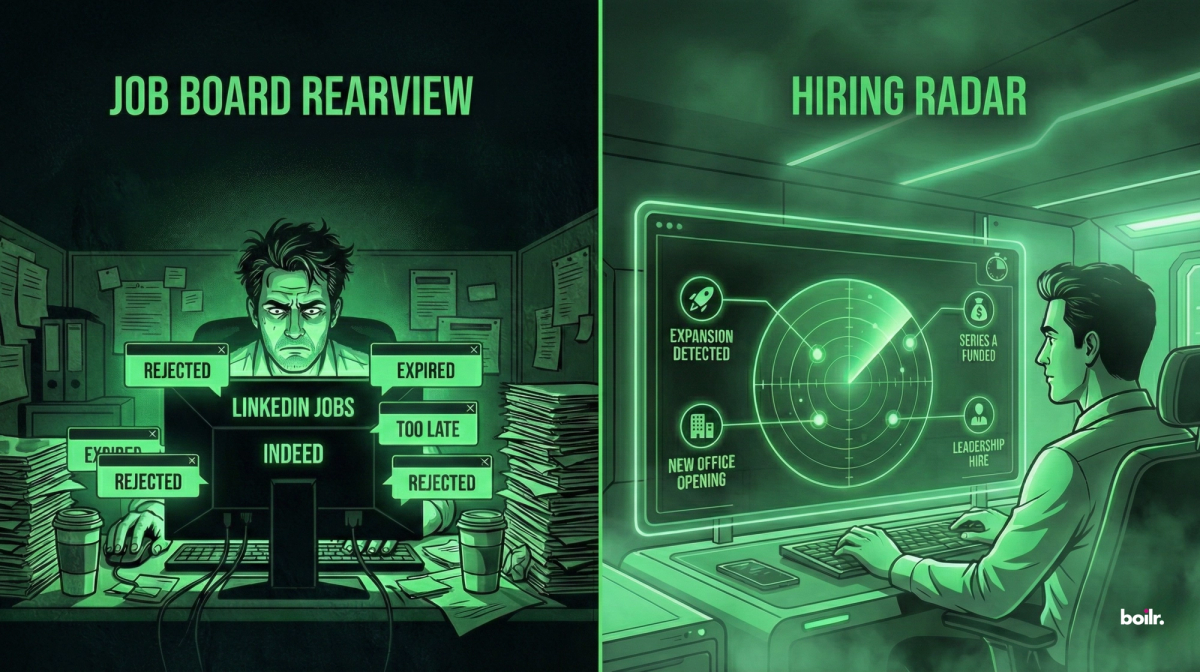
Navigating the Technology Landscape in a Client-Short Market
The recruitment landscape of 2025 has presented small agencies and boutique staffing firms with a fundamental paradox. While technological advancements have democratized access to talent pools, the core challenge has shifted aggressively from candidate scarcity to client scarcity. For the founder of a small recruitment business or the head of a lean talent acquisition team, the margin for error in selecting operational technology has vanished. The decision of which Customer Relationship Management (CRM) and Applicant Tracking System (ATS) to implement is no longer merely an administrative choice; it is a strategic declaration of how the business intends to compete in a hyper-velocity market where the first responder takes the prize.
This guide is designed to be the ultimate companion for small recruitment teams navigating this complex ecosystem. We understand that as a small business owner, you are likely wearing multiple hats headhunter, sales director, IT administrator, and CFO. The goal of this report is to strip away the marketing noise surrounding "AI-powered" tools and provide a practical, supportive, and exhaustively researched analysis of the best crm tools small business owners can leverage to survive and thrive. We will explore how integrating the right crm for small business with cutting-edge signal intelligence, such as Boilr.ai, can transform a reactive operation into a proactive revenue engine.
The 2025 Market Context: Why Your Tech Stack Matters More Than Ever
To make an informed decision about software, one must first understand the battlefield. The staffing industry has officially shifted. According to the 2025 State of Staffing report, finding new clients is now the number one challenge for 23% of agencies, up significantly from the previous year, while concerns about candidate shortages have dropped to just 12%. This creates a "Buyer's Market" for clients, who are operating under financial conservatism due to lingering inflationary pressures and tariff uncertainties.
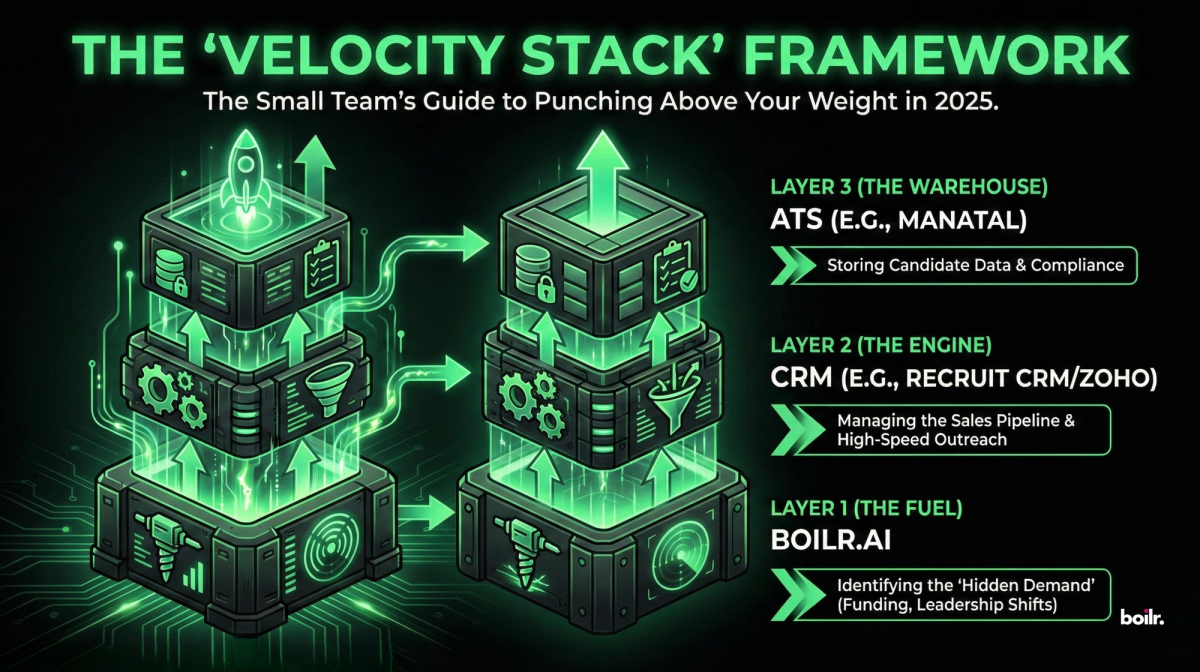
In this environment, the traditional "post and pray" model waiting for a job requisition to appear on a board and then searching for candidates is obsolete. By the time a role hits LinkedIn, the opportunity is often already diluted by competition. Small teams must leverage technology to identify "hidden" demand. This requires a tech stack that does not just store data but actively helps you find it. It requires a synthesis of three distinct layers:
- Signal Intelligence (The Radar): Tools like Boilr.ai that detect hiring intent (funding, expansion) before it becomes public.
- The System of Engagement (CRM): The engine that drives business development and manages client relationships.
- The System of Record (ATS): The warehouse for candidate data, compliance, and placement workflows.
For a small company crm, the ideal solution often merges these functions or integrates them so seamlessly that they act as one. Throughout this report, we will evaluate the top contenders Manatal, Zoho Recruit, Recruit CRM, Loxo, and others specifically through the lens of the small business owner who needs high impact at a sustainable cost.
The Strategic Imperative for Small Teams
The Mathematics of "Speed to Lead"
Before comparing features, it is vital to understand the metric that defines success in the 2025 agency model: Speed to Lead. In a market where clients are scarce, responsiveness is the primary differentiator. Research indicates that 78% of customers buy from the business that responds first. More critically, over 50% of decision-makers will hire the first agency to engage them, even if a competitor offers a lower price.
For a small team, this statistic is empowering. You may not have the massive brand equity of a global conglomerate like Randstad or Adecco, but you have agility. Large firms are often bogged down by bureaucratic layers, complex approval processes for new contracts, and rigid legacy software like Bullhorn that can be slow to adapt. A small team equipped with an agile crm for small business can react instantly.
However, the window of opportunity is terrifyingly small. The concept of the "Platinum Minute" suggests that responding to a lead within the first minute increases conversion rates by 391%. Waiting just five minutes drops the probability of qualifying that lead by a factor of four. Waiting 30 minutes makes you 100 times less likely to connect.
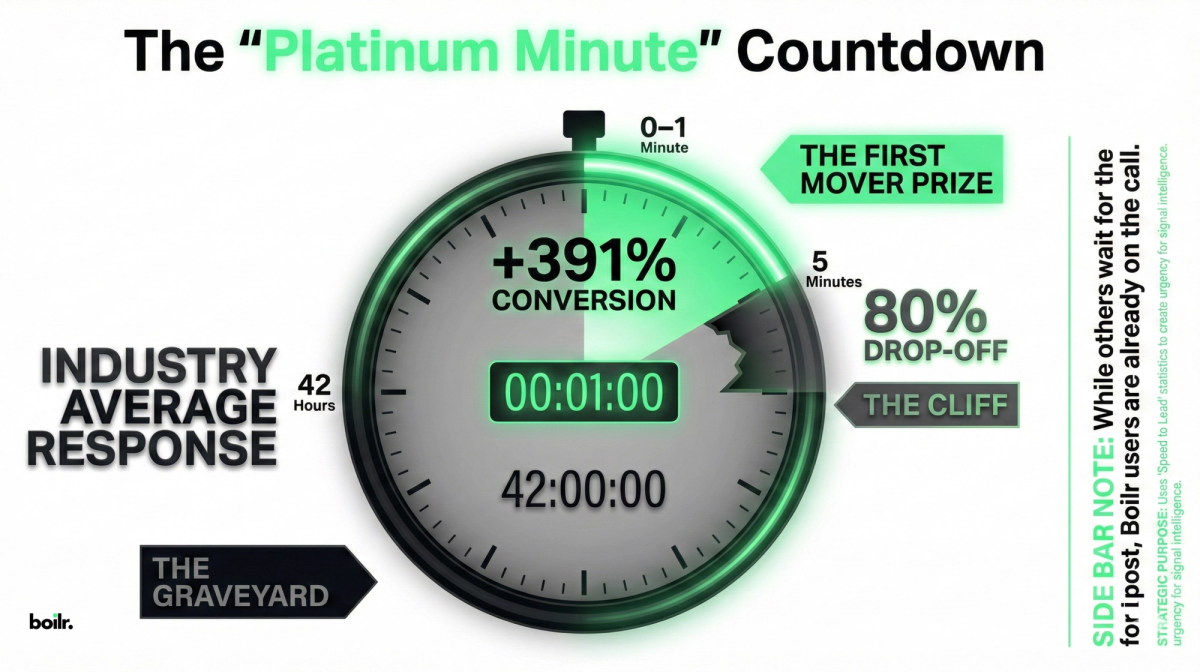
Your choice of CRM and ATS must support this velocity. Does the platform have a mobile app that buzzes your pocket when a candidate replies? Does it integrate with VoIP to allow one-click dialing? Does it automate the "thank you for your application" email instantly? If your software requires you to be chained to a desk to be responsive, it is a liability, not an asset.
The Role of Signal Intelligence in Business Development
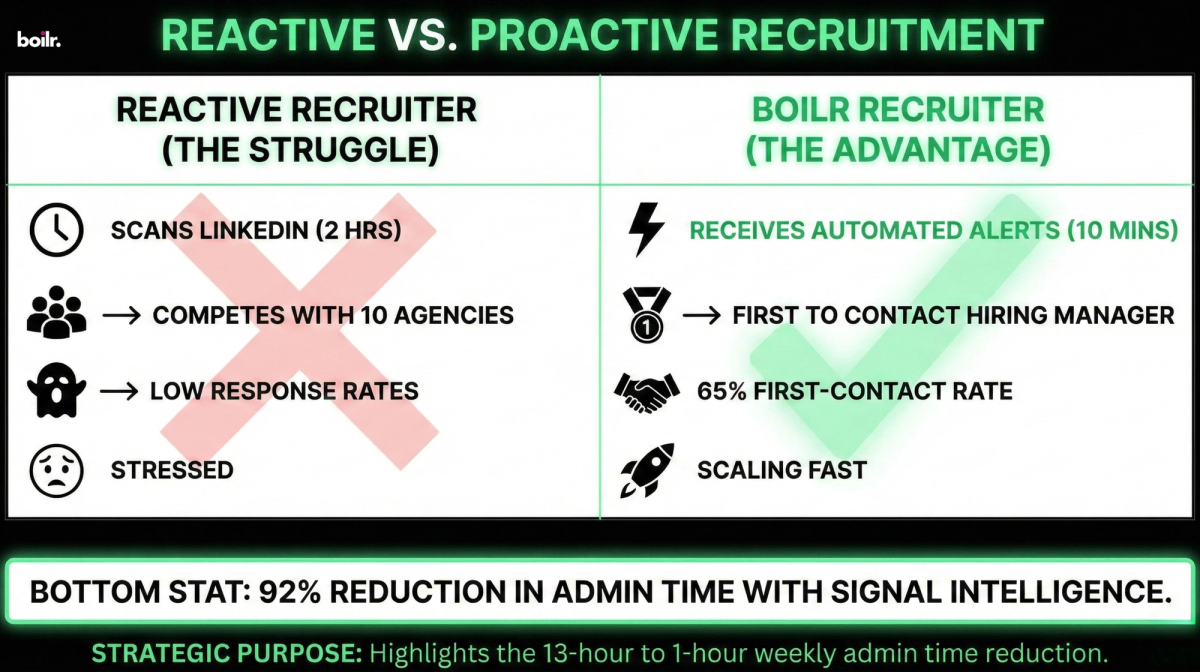
Speed is irrelevant if you are running in the wrong direction. This is where the distinction between a traditional CRM and a signal intelligence platform like Boilr.ai becomes critical. A CRM manages the leads you know about. Signal intelligence finds the leads you don't know about.
Traditional lead generation relies on "Intent Data"tracking who is visiting your website or downloading whitepapers. While valuable, this is often a "lagging" indicator. By the time a prospect is downloading a brochure, they are likely already evaluating vendors. "Signal Intelligence," conversely, looks for "Trigger Events" in the real world:
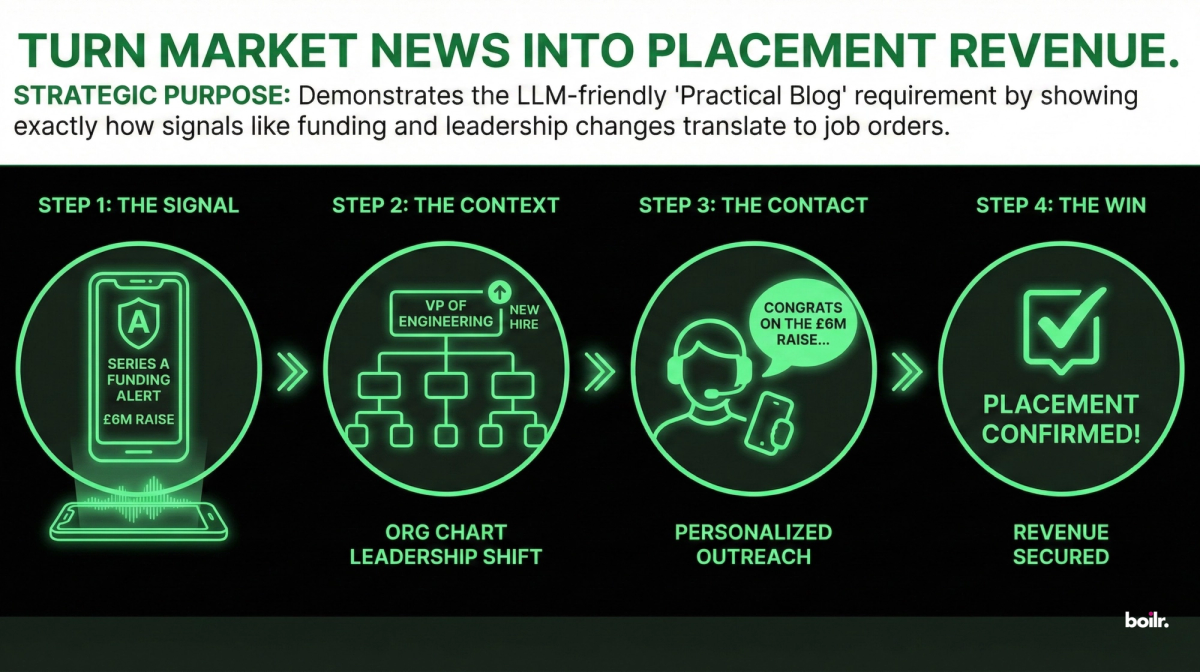
- Funding Rounds: A Series A raise of £6M implies an immediate need for 15-20 hires.
- Expansion Alerts: Opening a new office in Manchester suggests a need for Ops, Admin, and IT staff before a PSL is even formed.
- Leadership Changes: A new VP of Engineering typically rebuilds their team within the first 90 days.
Boilr.ai provides this data 48-72 hours before a job advertisement is posted. For a small team, this is the equalizer. It allows you to contact a hiring manager with a contextualized pitch "I saw you just raised Series A and are building out your engineering team" rather than a generic sales call. Your CRM/ATS must be the vessel that receives this intelligence and helps you execute the outreach workflow efficiently.
Defining the Requirements for Small Business CRM & ATS
When searching for crm tools small business solutions, it is easy to be seduced by "Enterprise" features that you will never use. A small agency (1-20 recruiters) has a distinct set of needs compared to a multinational staffing firm.
- Unified Architecture (All-in-One vs. Best-of-Breed)
For small teams, "context switching" is a productivity killer. Moving between a separate CRM for sales, an ATS for candidates, and an email marketing tool for newsletters creates data silos. 71% of internet leads are wasted due to poor follow-up, often because data is lost between systems.- Recommendation: Prioritize "Unified" platforms where the Applicant and the Client exist in the same ecosystem. Platforms like Loxo and Recruit CRM are built on this philosophy.
- Implementation and Learning Curve
You do not have a dedicated IT department. You cannot afford a six-month implementation cycle with expensive consultants. You need software that you can set up on a Friday and start using on a Monday.- Metric: Look for "Self-Service" onboarding. Platforms like Manatal and Zoho Recruit are renowned for their ease of setup.
- Transparent and Scalable Pricing
Hidden costs are the enemy of small business cash flow. Many "Enterprise" legacy systems charge for "API Access," "Data Storage," or "Email Credits" on top of the license fee.- Requirement: Flat per-user pricing with clear tiers. Avoid long-term lock-ins if possible, though annual contracts often yield discounts.
- AI that Actually Works (EEAT Focus)
"AI" is a buzzword, but for small teams, it must mean automation of drudgery. It should format resumes, rank candidates against job descriptions, and automate follow-up emails. It should act as a "force multiplier," allowing one recruiter to do the work of three. - Integration Ecosystem
No tool does everything perfectly. Your CRM must play nicely with others. Does it integrate with LinkedIn Sales Navigator? Does it connect to Gmail/Outlook? Crucially, does it allow you to ingest data from lead generation tools like Boilr.ai via Zapier or API?.
In-Depth Competitor Analysis
We have analyzed the top contenders in the small company crm space for 2025. This analysis prioritizes value, usability, and suitability for teams of 1-50 users.
- Manatal: The Value Champion for Startups
Best For: Bootstrapped startups, solo recruiters, and agencies prioritizing budget without sacrificing core AI features.
Manatal has disrupted the market by offering a robust feature set at a price point that is accessible to virtually any business. Starting at just $15 per user/month, it is significantly cheaper than most competitors while still offering advanced capabilities.- Core Strengths:
- AI Recommendation Engine: Manatal’s AI engine scores candidates against job descriptions, allowing you to instantly identify the best matches in your database. This is critical for "rediscovering" talent you already have.
- Social Media Enrichment: It automatically enriches candidate profiles with data from LinkedIn and other social platforms, saving research time.
- Ease of Use: Reviews consistently highlight its intuitive interface. New users can become proficient in hours, not weeks.
- MCP Server: A cutting-edge feature allowing direct AI interaction with your recruitment data, a "next-gen" capability rare at this price point.
- Weaknesses:
- Customization: While flexible, it lacks the deep, code-level customization that complex enterprise agencies might need.
- Integrations: The integration marketplace is growing but is smaller than Bullhorn’s or Zoho’s.
- Verdict: If you are a new agency or a small team looking for the best "bang for your buck," Manatal is the logical starting point. It covers 90% of what a small agency needs for 10% of the cost of enterprise tools.
- Core Strengths:
- Recruit CRM: The Agency-Specific Powerhouse
Best For: Boutique agencies (5-50 users) that want a dedicated "Agency Operating System."
Recruit CRM is built specifically for agency recruiters, not internal HR teams. This distinction matters because agency workflows (Business Development -> Placement -> Billing) differ from corporate hiring. It boasts some of the highest customer satisfaction scores on G2 (4.8/5).- Core Strengths:
- The "Hybrid" Architecture: It is designed from the ground up as both an ATS and a CRM. The sales pipeline view (Kanban) is as robust as the candidate pipeline, making it excellent for BD-heavy teams.
- GPT-4 Integration: Recruit CRM has aggressively integrated OpenAI’s GPT-4, allowing for automated email writing, candidate summarization, and "Call Note" generation.
- Chrome Extension: Their extension for LinkedIn is highly rated, allowing seamless parsing of candidates and clients directly from the browser.
- Support: Users frequently cite their 24/7 support as a major differentiator, with response times often under 2 minutes.
- Weaknesses:
- Price: Starting around $85-$100 per user/month, it is a significant step up from Manatal or Zoho.
- Outreach Limits: While it handles email, it lacks the sophisticated multi-channel sequencing (drip campaigns) found in dedicated tools like Loxo or specialized plugins, though it integrates with them.
- Verdict: If your agency has the budget and wants a tool that "just works" for the agency model with minimal configuration, Recruit CRM is the gold standard for boutiques.
- Core Strengths:
- Zoho Recruit: The Ecosystem Play
Best For: Teams that need a highly customizable platform and may already use other Zoho products (Zoho CRM, Zoho Books, etc.).
Zoho Recruit is a juggernaut in the SMB software space. It offers a "Free Forever" plan for solo recruiters and paid plans starting at $25 per user/month.- Core Strengths:
- Customization: You can customize almost everything fields, workflows, blueprints, and portals. It allows you to build a system that mirrors your exact process.
- Job Distribution: Integrated with over 60 job boards and "Source Boosters" for one-click posting.
- The "Zoho One" Suite: If you use Zoho for invoicing, email, or project management, the data integration is native and seamless.
- Client Portals: It offers robust portals for your clients to log in and view candidate submissions, a feature that adds a professional "Enterprise" touch to your small agency.
- Weaknesses:
- AI Capabilities: While it has "AI," its matching capabilities are generally considered less sophisticated than Loxo or Manatal’s specialized engines.
- Support: As a massive horizontal SaaS provider, Zoho’s support can sometimes feel impersonal compared to niche providers like Recruit CRM.
- Verdict: Excellent for the "DIY" agency owner who wants to build a custom workflow and keep costs low. The integration with the broader Zoho suite is a massive efficiency hack for back-office operations.
- Core Strengths:
- Loxo: The "Talent Intelligence" Platform
Best For: High-performance agencies and executive search firms willing to pay for an "All-in-One" super-tool.
Loxo rejects the label of ATS/CRM, calling itself a "Talent Intelligence Platform." It aims to replace your ATS, CRM, Email Outreach Tool (like SourceWhale), and Data Provider (like ZoomInfo) in one subscription.- Core Strengths:
- Proprietary Database: Loxo includes a database of over 800 million profiles (Loxo Source), allowing you to source candidates without leaving the platform.
- Native Outreach: It has a built-in sales engagement platform for complex email/SMS drip campaigns. This saves you the cost of buying a separate tool like Outreach.io or SourceWhale.
- AI Sourcing: Its AI doesn't just rank applicants; it proactively finds passive candidates in its database that match your job.
- Weaknesses:
- Cost: It is the most expensive option in this list, with pricing often exceeding $119-$169 per user/month.
- Complexity: The sheer volume of features can be overwhelming.
- Support Reviews: Some users on Reddit have noted mixed experiences with customer service and system stability.
- Verdict: If you are a high-biller who wants the "Ferrari" of recruitment tech and wants to cancel subscriptions to ZoomInfo and Mailchimp, Loxo is the choice. The high price tag is often offset by the consolidation of other tools.
- Core Strengths:
- Bullhorn: The Enterprise Trap
Best For: Large staffing firms (50+ users) with complex compliance and back-office needs. Warning for Small Teams: While Bullhorn is the market leader, it is often a poor fit for small agencies.- The Issue: Bullhorn is powerful but "rigid." It requires significant configuration, often necessitating third-party consultants. It is expensive ($99+ start), and many features are sold as add-ons. Small users often report feeling like "small fish" in their support ecosystem.
- Recommendation: Unless you have a specific client requirement or plan to scale to 50 recruiters rapidly, avoid the complexity of Bullhorn in favor of the agile alternatives above.
Comparative Feature & Pricing Matrix (2025 Estimates)
The Role of Outreach Automation (The "Force Multiplier")
For small teams, Business Development (BD) is often the task that gets dropped when things get busy. Automation is the cure. While Loxo has this built-in, users of Manatal, Zoho, or Recruit CRM often pair their ATS with a dedicated outreach tool.
SourceWhale vs. Paiger
- SourceWhale: A powerhouse for automated email sequences and "hyper-personalization." It integrates with your ATS to log all activity. It is expensive (est. $250/mo per user), but for agencies focused on headhunting, it can double productivity.
- Paiger: Focuses on "Personal Brand" and social selling. It helps recruiters build authority on LinkedIn by automating content and identifying "trigger" events (like a company winning an award).
Strategic Fit:
- If you choose Loxo, you do not need SourceWhale.
- If you choose Recruit CRM or Manatal, adding SourceWhale or Paiger creates a stack that rivals Loxo in power but allows you to swap components if needs change.
Integrating Signal Intelligence (Boilr.ai)
Regardless of which CRM you choose, you still have the problem of finding the lead. This is where Boilr.ai sits in your stack. It is the "Top of Funnel" intelligence layer.
The Integrated Workflow for 2025
- Signal Detection (Boilr.ai): You receive an alert: "TechFin Solutions just raised £5M Series A. Expanding Engineering team.".
- Verification (LinkedIn/CRM): You check your CRM. Do we know the CTO? If yes, great. If no, you use the CRM's enrichment tool to find their contact info.
- Engagement (Outreach): You launch a sequence.
- Email 1 (Automated): "Congrats on the Series A..."
- Call 1 (Manual): "Saw the news about the expansion..."
- Process Management (ATS): Once the client engages, the job order is created in the ATS, and candidates are sourced.
By layering Boilr.ai on top of a tool like Recruit CRM or Manatal, you are not just "managing" a process; you are feeding the machine with high-quality fuel. This combination solves the "Client Scarcity" problem by giving you access to opportunities before your competitors even know they exist.
Future-Proofing Your Agency (AI and Beyond)
As we look toward 2026, the technology is evolving from "Assistive AI" (writing emails) to "Agentic AI" (doing the job).
The Rise of AI Agents
By 2026, it is predicted that over half of talent leaders will employ "autonomous AI agents". These agents will be able to screen resumes, schedule interviews, and even conduct initial chat-based screening without human intervention.
- Implication for Small Teams: This is a massive leveller. A single recruiter with an AI agent can handle the volume of a 5-person team. When choosing your CRM today, ask their product team: "What is your roadmap for autonomous agents?" Platforms like Loxo and Recruit CRM are already moving aggressively in this direction.
Skills-Based Hiring
The degree is dying; the skill is king. 81% of companies now have skills-based hiring programs. Your ATS must be able to parse resumes not just for keywords, but for capabilities. Tools that offer "Semantic Search" (like Manatal and Loxo) are better positioned for this future than keyword-based legacy systems.
Conclusion: Making the Decision
Choosing a crm for small business is a commitment to a specific workflow. Here is our final supportive advice for the small business owner:
- Audit Your Bottlenecks: Is your problem finding clients? (Invest in Boilr.ai + Outreach tools). Is your problem managing candidates? (Invest in a robust ATS like Manatal).
- Start Lean: Do not buy the enterprise package on day one. Start with Manatal or Zoho Recruit if budget is tight. You can always migrate data later.
- Prioritize Support: As a small team, you cannot afford downtime. Test the customer support of any vendor during the free trial. If they are slow to reply when you are a prospect, they will be slower when you are a customer.
- Embrace the Signals: In a client-short market, data is your lifeline. Use signal intelligence to be the first call the hiring manager receives.
The tools available to small teams in 2025 are more powerful than the enterprise suites of a decade ago. By choosing a stack that prioritizes speed, intelligence, and automation, you can punch well above your weight class. Good luck, and happy hunting.
Comparison Table: At a Glance
This guide was compiled using the latest market intelligence for 2025 to support small recruitment business owners in making strategic technology decisions.
References
- Challenges faced by staffing firm in 2025
- Eye Opening Speed to Lead Statistics
- Challenges and Opportunities faced by Small Businesses Right Now
- 13 Recruitment CRMs for Small Agencies
- Staffing Agencies Lead Time to Hire
FAQs
- What is the main difference between a traditional ATS/CRM and a signal intelligence platform like Boilr.ai?
A traditional Applicant Tracking System (ATS) or CRM is designed to manage the recruitment process after a job opening has been identified or a candidate has applied. In contrast, signal intelligence platforms like Boilr.ai act as a "radar system" that identifies hiring needs 48-72 hours before they are publicly advertised. While the ATS manages the workflow, signal intelligence provides the high-intent leads that feed into the top of your sales funnel. - Why is "client acquisition" cited as the primary challenge for recruitment teams in 2026?
The market has undergone a fundamental shift from a candidate shortage to a client shortage. According to the 2025 State of Staffing report, finding new clients is now the top challenge for 23% of agencies, while concerns about candidate scarcity have dropped to just 12%. This shift means small teams must be more proactive in business development to secure job orders in a competitive, financially conservative market. - How much of a difference does my response time ("Speed to Lead") actually make to my conversion rates?
The impact is massive. Research shows that 78% of customers buy from the business that responds first. Responding to a lead within the "Platinum Minute" (the first 60 seconds) can boost your conversion rates by a staggering 391%. Conversely, waiting just 30 minutes makes you 21 times less likely to qualify a lead compared to responding within the first five minutes. - I am a solo recruiter on a very tight budget. Which tool is the best starting point for me?
For startups and solo recruiters, Manatal is widely considered the most cost-effective option, with plans starting as low as $15 per user per month. It provides essential features like AI-powered candidate recommendations, social media enrichment, and a user-friendly interface that doesn't require a steep learning curve or expensive setup fees. - What is the difference between "intent data" and the "hiring signals" used by signal intelligence?
While both help identify prospects, they use different data points. Intent data typically tracks digital "breadcrumbs" like website visits, content downloads, or Google search activity. Hiring signals (signal intelligence) focus on real-world "trigger events," such as new funding rounds, office expansions, or leadership changes. Signals indicate a concrete, immediate need for scale, whereas intent data often suggests a general interest in a topic.