Recruiter Sales Playbook 2026 by Boilr
Most recruitment agency playbooks are activity checklists: number of calls, emails, LinkedIn touches, and generic pitches about “quality candidates” and “speed to hire”.
Why most recruiter “sales playbooks” don’t convert?
Most recruitment agency playbooks are activity checklists: number of calls, emails, LinkedIn touches, and generic pitches about “quality candidates” and “speed to hire”. They rarely tell reps who to go after, when to reach out, or what to teach a hiring manager that they don’t already know.
In a challenger sales world, that’s a problem. Challenger reps outperform relationship sellers in complex B2B environments because they bring insight, not just effort. Gartner’s research on the Challenger methodology shows that Challengers make up a disproportionate share of high performers in complex sales.
- A recruiter sales playbook that actually converts has to do three things: Point your team at accounts with real hiring intent.
- Arm them with insight-led conversations (Challenger-style).
- Systematise how they move a hiring manager from “not looking” to “exclusive partner”.
This is exactly where signal intelligence tools like Boilr.ai change the game by giving you a 48–72 hour timing advantage on live and emerging hiring needs.
Pillar 1: Define a Challenger-ready ICP for recruitment sales
Before you script calls or cadences, your playbook needs a crisp Ideal Customer Profile (ICP) that fits both your niche and a Challenger sales motion.
Key ICP dimensions for recruitment agencies:
- Industry and function: e.g. VC-backed B2B SaaS, fintech, or industrial tech; focus on Engineering, GTM, Ops, etc.
- Company stage and growth pattern: Seed to Series C, recent funding, new market entry, or leadership changes.
- Geography and hiring model: Regions where you can credibly deliver, whether they use PSLs or are open to new partners.
- Buying group: VP Engineering, Head of Talent, Founder/CEO in early-stage, HR Director in later-stage.
How Boilr powers ICP discipline
Boilr lets you define your ICP once (industry, size, stage, location) and filters signals so you only see companies that match. This cuts admin from 13 hours a week to about 1 hour and increases opportunity volume by 2–3x, giving your sales team more at-bats with the right accounts.
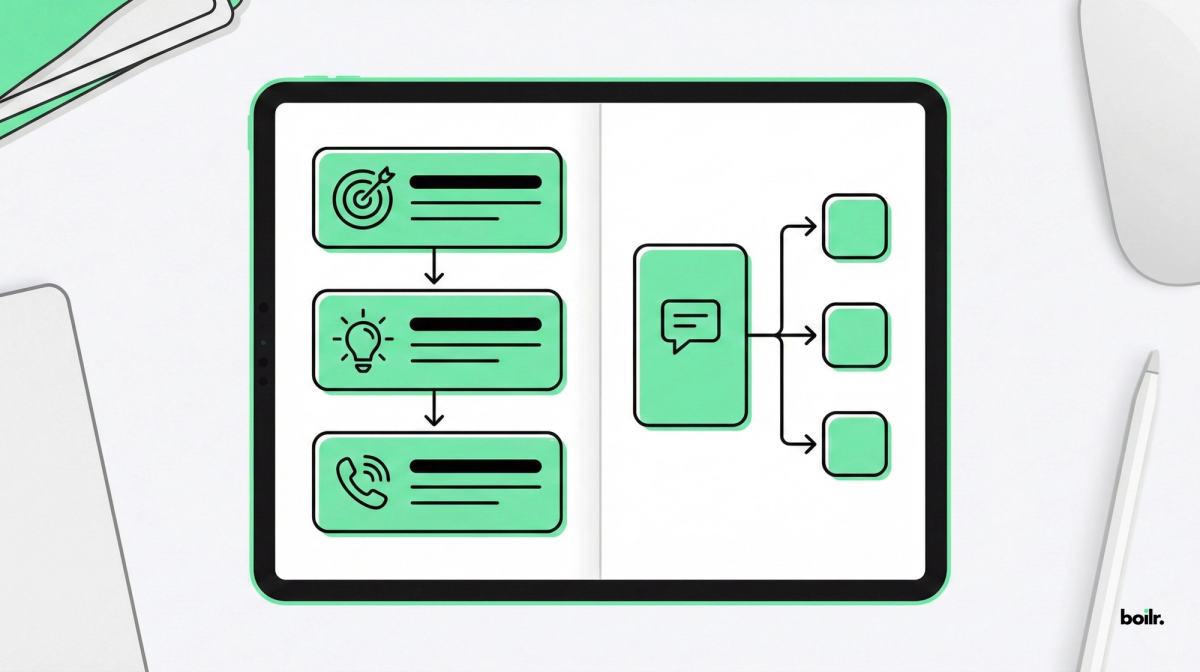
Pillar 2: Use signal intelligence to decide who you sell to (and when)
The highest-converting sales playbooks in recruitment are built on intent and timing, not on static lists.
Boilr’s signal categories map perfectly to a Challenger-style playbook:
- Expansion alerts
- Signal: New office or region launch, e.g. “FinTech company opens Manchester office → 40+ roles Q2 2025, no PSL in place.”
- Playbook move: Run a “greenfield build” play: propose a phased hiring plan by function (Ops, Admin, IT, Facilities) and a fast-track shortlist for critical roles.
- Funding rounds
- Signal: e.g. “£6M Series A → 15–20 planned hires, 8 Engineering, 3 Product, 5 GTM, stack React/Node/AWS.”
- Playbook move: Launch a Challenger-style “post-funding hiring blueprint” conversation that reframes hiring from “just filling roles” to “buying time-to-market”.
- Hiring velocity
- Signal: “+12% headcount in 30 days, 4 Engineers/week, 3 Sales, 18-day time-to-fill average.”
- Playbook move: Present insight on burnout risk, pipeline compression, and candidate quality when scaling too fast without structured sourcing partners.
- Leadership changes
- Signal: “New VP Engineering, team build: 2 Eng Managers, 4 Senior Devs, 2 DevOps, £480K budget, 90-day target.”
- Playbook move: Run a “new leader launch” play—help them re-architect the team quickly and hit their 90-day plan with pre-qualified talent pipelines.
This signal layer makes your playbook proactive: you’re talking about upcoming hiring waves 48–72 hours before jobs hit LinkedIn, not reacting once 3–5 competitors are already in the hiring manager’s inbox.
Pillar 3: Embed Challenger sales into your recruiter conversations
The Challenger Sales methodology revolves around three behaviours: Teach, Tailor, and Take Control. A recruiter sales playbook should mirror that.
Teach: Lead with insight, not CVs
Instead of “We have great candidates”, your talk tracks should:
- Quantify the hiring risk tied to the signal (e.g. cost of delay after funding, risk of missed product roadmap with late senior hires).
- Benchmark the prospect against peers (e.g. “Most Series A SaaS firms add X engineers in the first 90 days post-funding; here’s where you are relative to that.”).
- Educate on a better approach: new sourcing channels, talent mapping, or structured interview frameworks
Boilr’s ready-to-go leads include context on “why now?” and who the hiring manager is, which gives you the raw material to construct these Challenger insights with specific reference to their situation, not generic market talk.
Tailor: Align the pitch to persona and signal
Your playbook should contain persona-specific messaging modules for:
- Founder/CEO: Time-to-market, burn multiple, and runway vs. hiring ramp.
- VP Engineering/Product: Tech stack depth, senior-to-mid ratio, team topology, and on-call resilience.
- Head of Talent/HR: Employer brand, candidate experience, time-to-fill, and internal stakeholder satisfaction.
Because Boilr already segments opportunities by signal type and company profile, you can define different “plays” by signal-persona pair, for example “Series A funding × Founder” or “New VP Eng × Enterprise SaaS”
Take control: Orchestrate the next steps
A Challenger recruiter doesn’t just ask, “Do you have any roles open?” They propose a concrete commercial path tied to the signal:
- “Let’s start with a 90-day pilot covering the 8 engineering roles you’ve budgeted.”
- “We’ll own the first 10 GTM hires for the Manchester office on an exclusive basis with defined SLA.”
Boilr’s measurable impact data (e.g. +183% increase in first-contact rate and 6-week payback period) can be woven into your commercial narrative to reduce perceived risk.
Pillar 4: Structure the recruiter sales playbook, step by step
A practical, rankable playbook should read like an SOP your team can open every day.
Step 1 – Market and territory definition
- Choose your core verticals and geos (e.g. UK SaaS, DACH industrial tech, US fintech).
- Codify average deal sizes, typical buyer personas, and common hiring triggers for each
Step 2 – Signal-driven account selection
- Configure Boilr with your ICP: industry, size, stage, and geography.
- Set up alerts for expansion, funding, hiring velocity, and leadership changes, and assign owners for each account.
Step 3 – Build Challenger talk tracks and scripts
For each signal type, create:
- An opening insight: a strong point of view about what’s changing in their world.
- 3–5 high-gain discovery questions.
- A tailored problem narrative (e.g. “hidden hiring risk after funding”).
- A recommended next step (pilot, exclusivity, or retained search).
Tools like Salesforce and other CRM platforms recommend that playbooks include scripts, objection-handling snippets, and proposal templates, which you can embed directly into your sales engagement tools.
Step 4 – Design multi-channel plays (not just more calls)
For each opportunity:
- Call + email + LinkedIn sequence with day-by-day steps.
- Teaching content assets (one-pagers, short videos, market snapshots) linked to the specific signal and persona.
- A clear “ask” for each touchpoint—calendar link, discovery call, or workshop.
Boilr’s contact details and context reduce research time from hours to minutes, so your team spends more time executing these plays and less time guessing who to contact.
Step 5 – Metrics and continuous optimisation
Track:
- First-contact rate (Boilr users typically see an increase from 23% to 65%).
- Time-to-contact after a hiring signal appears.
- Opportunities created per rep per week and win rate per signal type.
- Payback period and client growth (Boilr shows 6-week payback and measurable client growth over baseline).
Use these metrics to refine your plays: for example, if leadership-change signals convert best to retained work, adjust your commercial offer for that specific trigger.
Tool and competitor comparison: where Boilr fits in your playbook stack
A sales playbook that converts usually sits on top of a tech stack: ATS/CRM, sourcing tools, outreach automation, and now signal intelligence.
Recruitment tools vs Boilr.ai
SourceWhale, Sourcebreaker, Bullhorn, Vincere, and Paiger are all reactive or process-focused: they work when roles are already defined and often already public, or when you’re managing existing jobs and candidates.
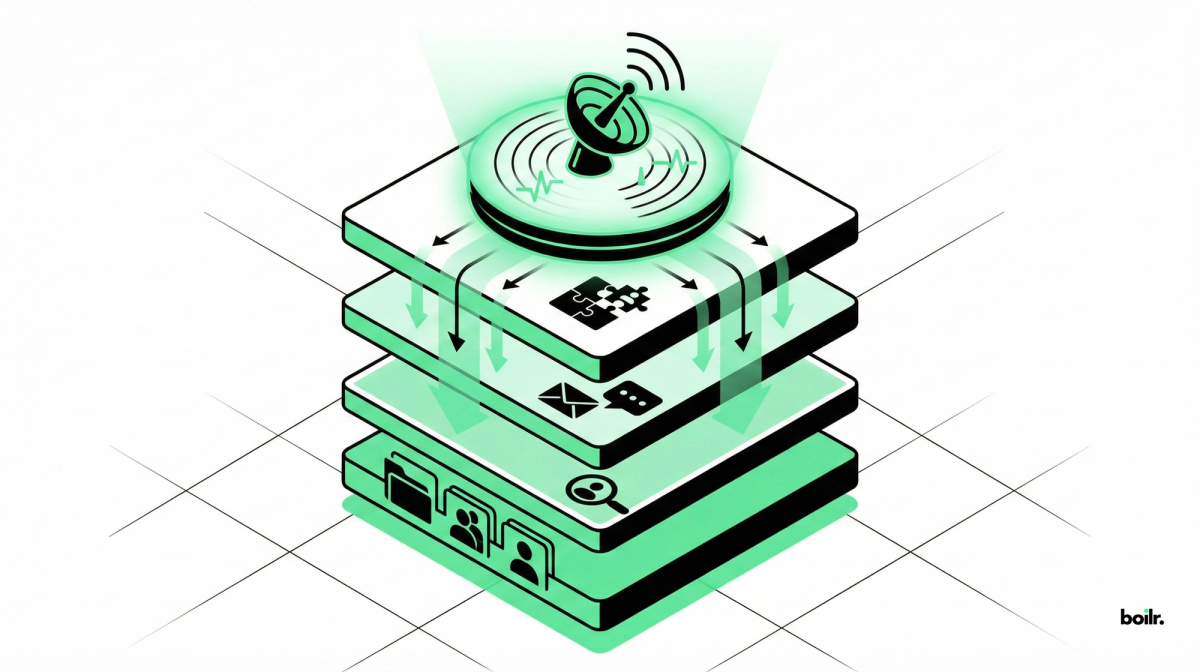
Boilr sits above them as a hiring radar that feeds your playbook with net new client opportunities before your competition knows they exist, which is critical if your strategy is Challenger-led and timing-sensitive.
Bringing it together: a recruiter sales playbook that actually converts
To build a recruiter sales playbook that converts in 2026, combine:
- A sharply defined ICP and territory strategy.
- A Challenger-style sales motion that teaches, tailors, and takes control in every conversation.
- A signal intelligence layer like Boilr to decide who to talk to and when, using expansion, funding, velocity, and leadership-change signals.
- An integrated stack (ATS/CRM, outreach, sourcing, matching) that executes and measures these plays end to end.
In a market where speed and insight are everything, Boilr.ai gives recruitment agencies a 48-72 hour informational edge, turning your sales playbook from a static document into a live radarguided system that consistently opens more, better, and earlier conversations with hiring managers.
FAQs
- What is a recruiter sales playbook and why do agencies need one?
A recruiter sales playbook is a structured guide that shows your team exactly who to target, what to say, and when to say it to win new clients consistently. It ties together ICP definition, talk tracks, outreach cadences, and qualification criteria so your team isn’t “winging it” on every call. A good playbook turns individual heroics into repeatable, scalable business development. - How does the Challenger Sales methodology apply to recruitment sales?
In recruitment, Challenger Sales means you don’t sell “CVs” or “access to candidates”; you teach hiring managers something new about hiring risk, time-to-market, or team design in their context. Instead of asking, “Any roles you’re struggling with?”, you lead with insight based on their growth stage, funding, or org changes, then take control by proposing a clear plan (e.g. a 90‑day hiring blueprint for their new office or post‑funding scale‑up). - How can tools like Boilr.ai improve my recruiter sales playbook?
Signal intelligence tools like Boilr.ai give you early warning when companies are about to hire: new offices, fresh funding, sudden headcount growth, or leadership changes. That 48–72 hour head start lets your team contact hiring managers before jobs go live and inboxes get flooded, which can dramatically improve first‑contact rates, opportunity volume, and win rates. You then plug these signals into your Challenger-style scripts and cadences to make every outreach timely and relevant. - How is Boilr.ai different from tools like Bullhorn, SourceWhale, or Paiger?
Bullhorn and Vincere mainly manage your recruitment workflow (ATS/CRM), SourceWhale automates outreach, and Paiger focuses on talent matching once jobs are open. Boilr.ai sits above all of them: it doesn’t manage jobs or candidates, it tells you which companies are about to start hiring and why. You use Boilr to generate and prioritise client opportunities, then use ATS, sourcing, and outreach tools to execute and track those deals. - What KPIs should I track to know if my recruiter sales playbook is working?
Key metrics include first-contact rate (how often you get a meaningful conversation started), time-to-contact after a hiring signal appears, number of qualified opportunities created per rep per week, and win rate by trigger type (funding, expansion, leadership change, etc.). Commercial KPIs like client growth, average deal size, and payback period on your tech stack will show whether the playbook is not just creating activity, but actually generating profitable, repeatable revenue.